The BESS Boom of 2026
In 2026, the battery energy storage system (BESS) industry is undergoing a transformative period. Record deployments, evolving battery chemistries, and new demand drivers — including AI data centers and utility-scale renewable firming — are reshaping energy storage planning, procurement, and deployment globally. This article explores the latest trends in the BESS market and their implications for your next project.
Global BESS Deployment Is Surging
The growth in 2026 is remarkable. According to InfoLink Consulting, global shipments of battery energy storage systems reached 421.2 GWh in 2025, marking a 75.5% year-over-year increase. Projections for 2026 suggest shipments will reach around 600 GWh. Actual grid-connected deployments hit 275.3 GWh in 2025, with forecasts estimating approximately 459 GWh of new deployments in 2026. This surge is driven by the integration of renewable energy, grid modernization, and demand from AI data centers across Asia, the Americas, and Europe.
The global BESS market is expanding robustly, with recent forecasts placing its value between USD $50–90 billion in 2026, potentially reaching USD $100–200 billion by the early 2030s. This growth reflects not only volume increases but also improvements in project economics, technology, and policy support worldwide.
LFP Remains the Dominant Chemistry
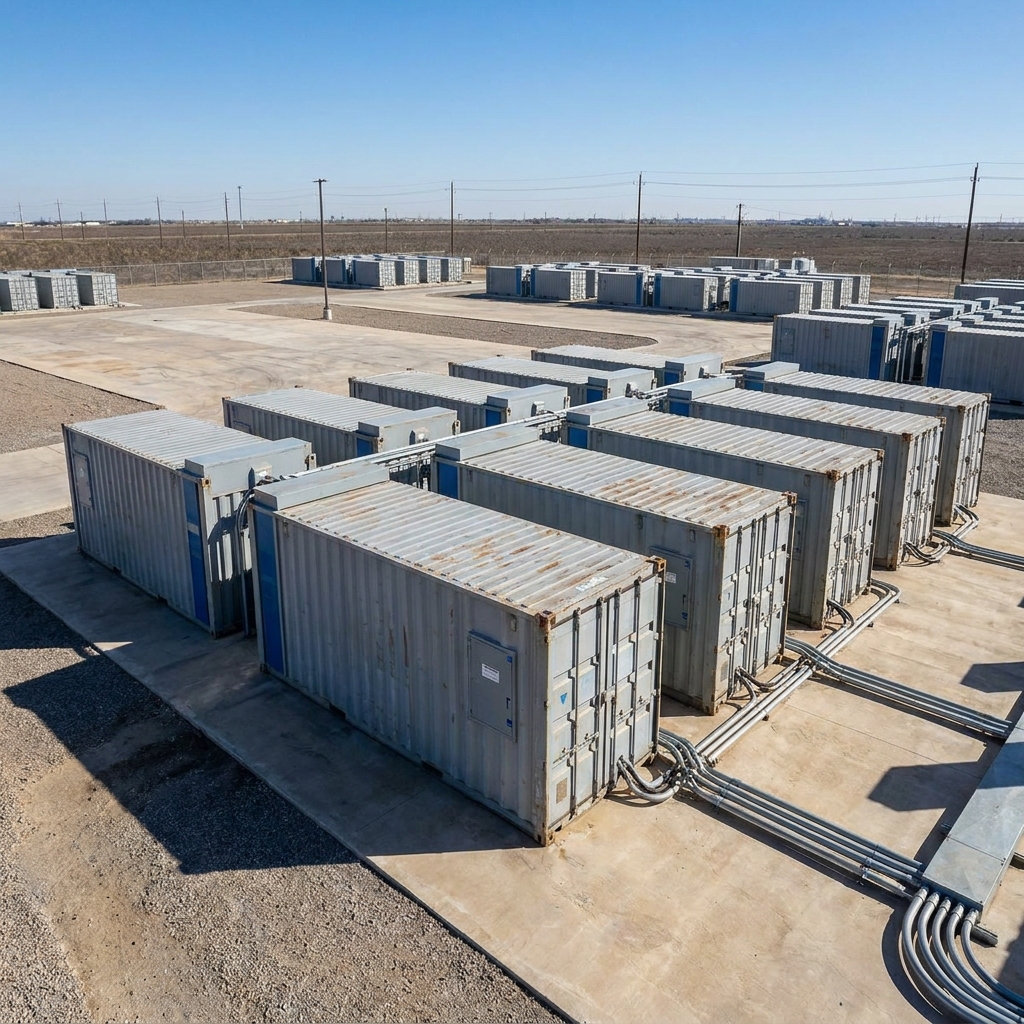
Lithium Iron Phosphate (LFP) continues to dominate the global BESS market, accounting for 58% of all lithium-based installations. In 2025, LFP demand grew 48% year-on-year, driven by its safety, long cycle life, and declining costs. Manufacturers are now introducing larger-format prismatic cells, with 5 MWh enclosures in standard 20-foot ISO containers becoming the new benchmark.
Sodium-Ion: A Chemistry to Watch
Sodium-ion (Na-ion) battery technology is gaining attention in 2026. CATL has introduced its Naxtra sodium-ion battery, offering a lower-cost, lithium-free alternative for stationary storage. In the U.S., sodium-ion BESS developer Peak Energy has signed a commercial agreement for a 180 MW / 720 MWh project, with potential for further orders.
Market analysts project the sodium-ion battery market could grow from 70 GWh today to approximately 400 GWh by 2030. However, for current commercial and utility-scale projects, LFP remains the proven and cost-competitive choice.
Record-Scale Projects Commissioned Worldwide
In 2026, several large-scale BESS projects have been commissioned:
- A 250 MW / 1,000 MWh project in Ontario, Canada, through a joint venture between Ameresco and Atura Power.
- Contact Energy’s 100 MW / 200 MWh BESS at New Zealand Steel’s Glenbrook site.
- Spearmint Energy’s 300 MW / 600 MWh Red Egret BESS project, supported by a US$450 million financing package.
- Ørsted’s acquisition of a 150 MW BESS in Michigan from ESA Solar Energy.
- In Australia, two major BESS projects, including a 400 MW / 2,000 MWh system co-located with a solar PV plant in Queensland, have cleared federal environmental approvals.
AI Data Centers: The Unexpected New BESS Driver
The rapid expansion of AI-powered data centers is emerging as a significant growth driver for BESS in 2026. These facilities consume a larger share of grid capacity, leading to on-site energy storage evolving beyond traditional uninterruptible power supply (UPS) applications. Battery systems deployed alongside data centers are increasingly capable of supporting grid frequency regulation and demand response.
What This Means for Your Next BESS Project
The BESS market in 2026 is evolving quickly, but key project fundamentals remain:
- LFP containerized BESS is the proven technology for commercial and utility-scale projects.
- Modular, scalable systems are in high demand, allowing for expansion from a single container to multi-MWh configurations.
- Factory pre-testing and certification to standards such as UL 9540 and IEC 62619 are essential for project bankability.
- Speed to deployment is crucial; containerized BESS reduces commissioning timelines significantly.
Conclusion
The BESS boom of 2026 is driven by falling LFP cell costs, larger container formats, record utility-scale deployments, and new demand from AI infrastructure. For project developers, containerized BESS offers the optimal combination of performance, speed, and reliability needed to capitalize on this moment in the energy transition.